Language
What is Grascii?
Grascii is a language for representing Gregg Shorthand forms using the ASCII character set.
Philosophy and Goals
Grascii strives to:
be intuitive to those already familiar with the Gregg system
describe shorthand forms accurately and succinctly
prioritize ease of reading and writing for humans over ease of processing for computers
Gregg Editions
The current definition of Grascii is based on the Preanniversary (1916) edition of Gregg Shorthand.
Given that Preanniversary is almost a superset of all later editions of Gregg, Grascii is capable of representing the majority of shorthand forms across all editions.
Strokes
Shorthand Form |
Grascii Representation(s) |
Annotation(s) |
|---|---|---|

|
K |
|

|
G |
|

|
R |
|

|
L |
|

|
N |
|

|
M |
|

|
T |
|

|
D |
|

|
TH |
( ) , |

|
P |
|

|
B |
|

|
F |
|

|
V |
|

|
CH |
|

|
J |
|

|
S, Z |
( ) , |

|
X |
( ) |

|
SH |
, |

|
‘ |
|

|
NG |
|

|
NK |
|

|
LD |
|

|
A |
~ | . , |

|
E |
~ | . , |

|
O |
( . , |

|
U |
) . , |

|
EU |
|

|
AU |
|

|
OE |
|

|
I |
~ | |

|
A&E |
~ | |

|
A&’ |
~ | |

|
NT, ND |
|

|
MT, MD |
|

|
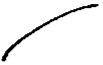
TN, DN |
|
|
TM, DM |
|

|
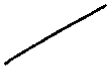
MN, MM |
|
|
DT, TD, DD |
|

|
DF, DV, TV |
|

|
JNT, JND, PNT, PND |
|

|
SS |
) ( |

|
XS |
) ( |
Annotations
Annotation |
Acceptable Tokens |
Description |
|---|---|---|
. |
A, E, O, U |
Denotes the medium sound of the four standard vowel groups. |
, |
A, E, O, U |
Denotes the long sound of the four standard vowel groups. |
, |
S, Z, TH, SH |
Denotes the more obscure sound of the preceeding consonant. Ex. gas vs. gaze, breath vs. breathe, assure vs. azure. |
~ |
A, E, I, A&’, A&E |
Denotes that the preceeding circle vowel is reversed. |
| |
A, E, I, A&’, A&E |
Denotes that the preceeding circle vowel is looped. |
) |
S, Z, X, SS, XS, TH |
When following an S/Z/X/SS/XS, denotes a right S/Z/X/SS/XS. When following an TH, denotes an under TH. |
( |
S, Z, X, SS, XS, TH |
When following an S/Z/X/SS/XS, denotes a left S/Z/X/SS/XS. When following an TH, denotes an over TH. |
( |
O |
Denotes an O on its side. |
) |
U |
Denotes an U on its side. |
_ |
A, E, O, U, I, EU, OU, OE, A&’, A&E |
Signifies a W sound to be applied before the preceeding vowel. |
Note
The direction of a SS/XS is based on the direction of the tail S. That is, a right SS resembles a longhand “s” whereas a left SS is flipped.
Other Symbols
Symbol |
Description |
|---|---|
^ |
When placed between tokens, denotes that the two forms are disjoined. When placed at the end of a form, denotes that the preceeding form lies above the line of writing. |
- |
When placed between grascii forms, denotes that the two characters should not be interpreted as a blended form. Ex. N-T prevents interpretation on NT. |
Examples
Shorthand Form |
Grascii |
Longhand |
|---|---|---|

|
AKEUM^U |
Accumulate |

|
APRXSH |
Approximation |

|
BOLDN |
Boldness |

|
DFINT |
Defiant |

|
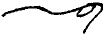
FETH) |
Feather |
|
GRAUCH |
Grouch |

|
‘A~MNE |
Harmony |

|
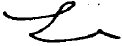
ENKL’ |
Inkling |
|
LAFLNG |
Lifelong |

|
PRMT |
Prompt |

|
SA&ENTES |
Scientist |

|
S(E,D |
Seared |

|
TNJNT |
Tangent |
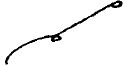
|
TMEDTE |
Timidity |

|
VOEJ |
Voyage |
Ambiguity
Grascii is moderately ambiguous. However, as the shorthand system is also ambiguous, it is reasonable that Grascii inherits this attribute.
Being ambiguous raises the question of how to interpret Grascii strings. See Interpretation for a discussion on this topic.
Unsupported Language Features
Grascii does not provide a way of distinguishing between smooth and sharp joinings. There is no plan to make it possible to make this distinction in the future.
Intersection is currently not implemented. Proposed symbol to denote two intersected characters: \.
RD is currently not implemented as it does not appear in Gregg 1916, although, it is a form in subsequent versions.
There is no way of distinguishing the capitalization of a form.
The under joining/short vowel sound is not included.